| Snowed under | Damien Ihrig, MA, MLIS
Curator, John Martin Rare Book Room
 Winter is coming here! Inspired by the wintery weather here in Iowa, this month, we highlight John Snow's 1847 edition of On the inhalation of the vapour of ether in surgical operations. Winter is coming here! Inspired by the wintery weather here in Iowa, this month, we highlight John Snow's 1847 edition of On the inhalation of the vapour of ether in surgical operations.
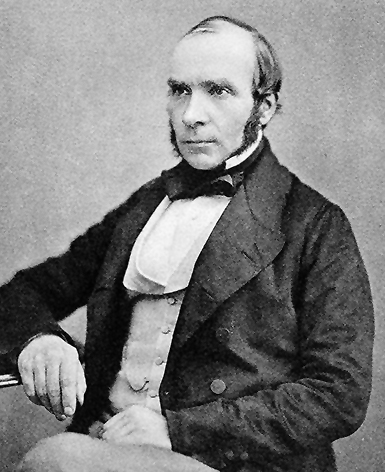
Snow (1813–1858), seen here trying hard not to laugh at a bad joke, is known to most for his innovations in epidemiology—most famously mapping a London cholera epidemic to its probable source, a tainted well. Before his famous cholera map, though, Snow made a name for himself in the burgeoning medical specialty of anesthesiology. Through his drive to better people's lives, systematic approach to medicine, and his inventive mind, he helped establish ether and, later, chloroform as viable surgical anesthetics in Britain.
Snow was quite the character. His meticulous approach to understanding medicine and his push back against established theories with logic and empirical data earned him friends and enemies alike. He was also a lifetime teetotaler and 19th-century equivalent of a "gym rat." His work even made a fan of a queen, cementing his fame.
Want to know more about Snow and our copy of On the inhalation of the vapour of ether in surgical operations? Knock yourself out! Take a deep breath, count back from 100, and keep on reading.
John Snow was born in 1813 in York, England, the eldest of nine children in a modest home on North Street. His family lived in one of the city’s poorest neighborhoods, an area often threatened by flooding from the inauspicious-sounding River Ouse. Growing up amid unsanitary streets and contaminated water likely influenced Snow’s later commitment to hygiene and public health.
He was a tireless investigator and medical innovator. He invented instruments, studied respiratory diseases, and explored theories of “microcirculation” in the capillaries. These interests laid the foundation for his pioneering work in anesthesia.
Anesthesia, both general and local, has a long history in medicine, dating back thousands of years. Many substances have been used to induce unconsciousness or numbness in medicine, including alcohol, opium, cocaine, and even snow. By the 18th century, physicians and surgeons were investigating gases like nitrous oxide as viable anesthetics.
In the 19th century, morphine, ether, and chloroform entered the fray. The knowledge for producing ether had been around for centuries, but it was now being used systematically for the first time as an anesthetic. It was also a somewhat popular campus party drug, shared at events called "ether frolics."
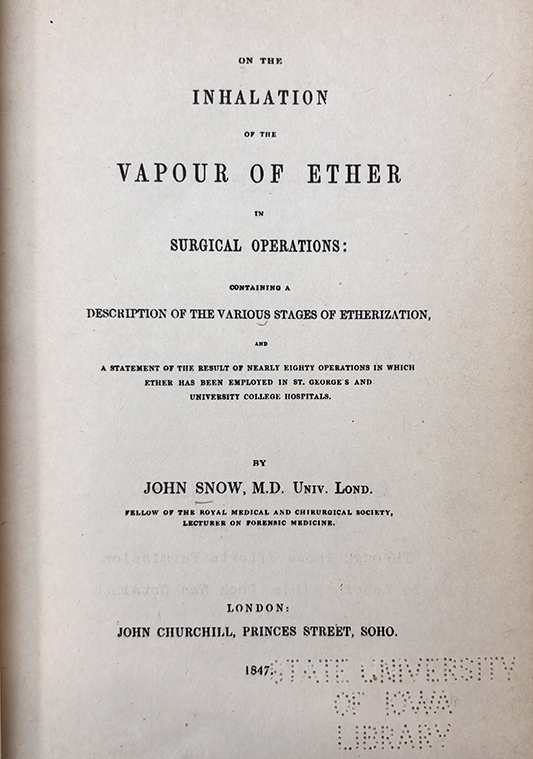
Snow quickly saw the potential of ether and started experimenting with dosages and delivery methods. In 1847, he wrote about his experiences with ether in On the inhalation of the vapour of ether in surgical operations, demonstrating his systematic approach to safely administering the anesthetic. We are happy to have a copy of this foundational work in anesthesia. Beyond the inherent value of the text, our copy also comes with an interesting (not so) secret backstory.
Hours
The JMRBR is open to the public from 8:30 a.m. to 5 p.m. Monday through Thursday and by appointment on Friday. For more information, please contact me at damien-ihrig@uiowa.edu or 319-335-9154. | | | | SNOW, JOHN (1813–1858). On the inhalation of the vapour of ether in surgical operations. Printed in London by J. Churchill, 1847. Facsimile ed., reproduced courtesy of the Boston Medical Library [1940?]. 24 cm tall.
Snow showed an aptitude for mathematics and science from an early age. At the age of 14, in 1827, he began a medical apprenticeship. During this time, he attended lectures at the Newcastle School of Medicine and gained practical experience at the local infirmary. His first major encounter with cholera came in 1832, when he was sent alone to care for families during an outbreak in Killingworth, a coal-mining village. This experience sparked his lifelong interest in public health and disease prevention.
After completing his apprenticeship, Snow worked as an assistant to rural physicians between 1832 and 1835, saving enough money to pursue advanced training in London. In 1836, Snow enrolled at the Hunterian School of Medicine in London, living near Westminster Hospital, where he gained clinical experience and valuable professional connections. His determination and strategic planning helped him rise quickly through the medical ranks.
Snow established a practice in London and actively participated in medical societies, debates, and publications. He published his first paper in 1841 and continued to contribute to journals throughout his career.
In 1846, just weeks after ether was first demonstrated as an anesthetic in Boston by the American dentist William Morton, Snow began studying its effects. In 1847, he introduced the concept of anesthesia stages and published a monograph based on 80 cases.
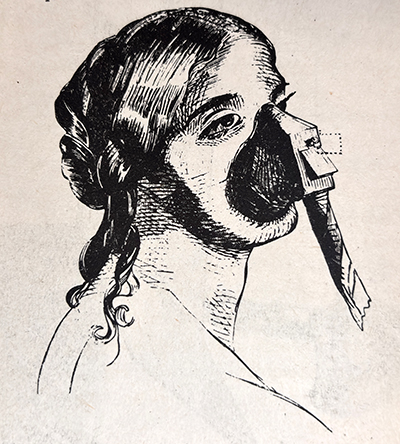
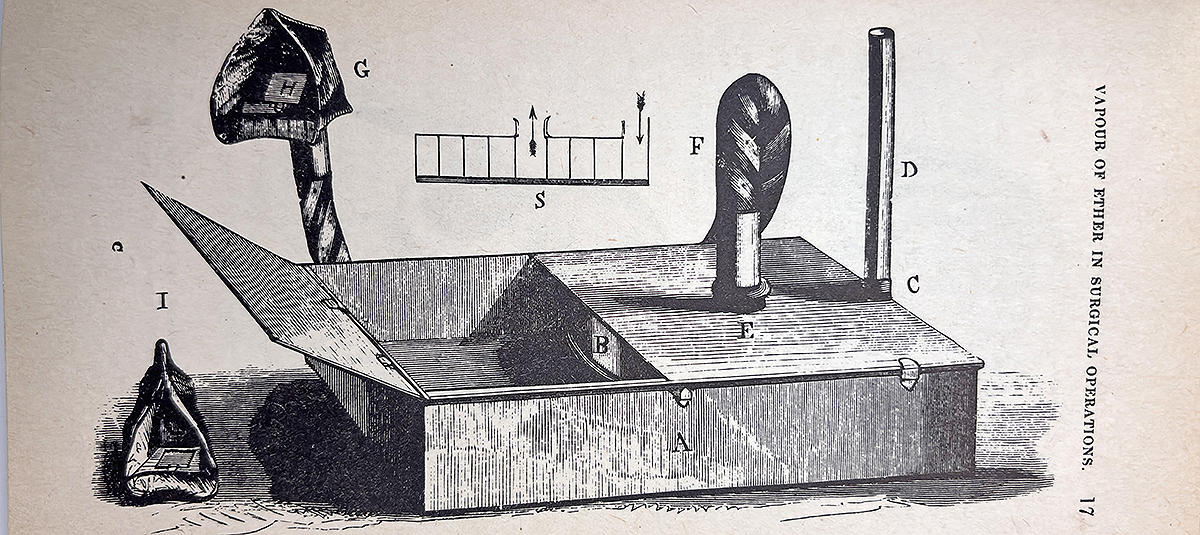
Recognizing the need for precision and safety, Snow designed specialized inhalation apparatus and masks to deliver controlled doses. His hallmark was a methodical fusion of clinical observation, respiratory physiology, and gas chemistry, paired with purpose-built instruments, such as portable inhalers (his “pocket etherizer”), designed to deliver predictable effects case after case. His approach set him apart from contemporaries who used rudimentary methods (like cloths soaked in ether) and made him Britain’s leading anesthetist by 1850.
Snow studied chloroform with the same rigor after its introduction in 1847 by James Young Simpson. Carefully investigating fatalities—most notably the death of Hannah Greener in 1848—he argued for meticulous dosing and technique, communicating his guidance in The Lancet. His posthumous volume, On chloroform and other anaesthetics: their action and administration (1858), consolidated his clinical experience and safety principles.
In obstetrics, Snow treated 77 patients with chloroform, introducing it during the second stage of labor to reduce pain without complete unconsciousness. Though many physicians and church leaders initially objected, public confidence changed after Queen Victoria asked Snow to administer chloroform for the births of two of her children, solidifying the legitimacy of obstetric anesthesia.
Moving on to epidemiology, Snow was skeptical of the dominant miasma theory, the belief that “bad air” caused disease. He argued that cholera actually spread through contaminated water. His | | | investigation of an outbreak in a London district combined street-level mapping, household interviews, and comparative statistics, culminating in his landmark conclusion that a specific water pump was the outbreak’s source. Snow’s work helped catalyze reforms in urban water and sewage systems, first in London and then more broadly, reshaping the infrastructure of modern cities and advancing public health worldwide.
Personally, Snow was reserved and austere. He avoided alcohol, lived simply, and devoted himself to study and experimentation. He drank only boiled or distilled water and swam for exercise (no doubt in a clean body of water!). Friends appreciated his integrity and disinterest in wealth or fame. And despite his reported shyness, he had a knack for wry anecdotes.
On June 10, 1858, Snow suffered a severe stroke in his London office and died six days later at age 45. Some historians have speculated that his frequent exposure to anesthetic agents—ether, chloroform, ethyl nitrate, carbon disulfide, benzene, bromoform, ethyl bromide, dichloroethane—may have contributed to his early death, though the cause remains probable stroke.
Today, he is remembered as a visionary of evidence-based medicine, whose precise methods transformed surgery, obstetrics, and public health, and whose analytic approach laid key foundations for modern epidemiology.
As you may have noticed in the book description above, our copy is a reproduction from another library. Reproductions and facsimiles (reproduction's fancier cousin) are a great way for collections to provide access to material they otherwise wouldn't be able to. The JMRBR, for example, focuses on printed works, so medieval manuscripts are out of scope for the collection. Providing access to an earlier manuscript of a later printed edition, though, can be very helpful for classes and researchers, especially if the manuscript is illustrated. Thus, although we have the 1531 printed edition of Nicander's Theriaka y alexipharmaka, we also have the 1997 printed facsimile of an earlier manuscript.
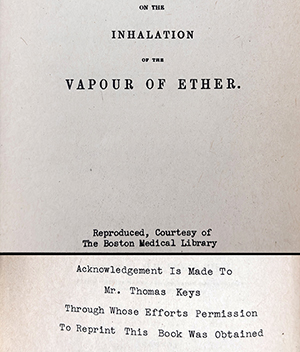
In the case of On the inhalation, it is a reproduction courtesy of the Boston Medical Library, with an acknowledgement for Thomas Keys. We can't be 100% certain, but it seems likely this was Thomas E. Keys, former director of the Mayo Medical Libraries. Up until recently, though, On the inhalation was not labeled as a reproduction in our catalog. That might have given someone the wrong impression and possibly cause for disappointment. Thanks to our rare books cataloger extraordinaire, Duncan Stewart, the entry now accurately reflects the book.
Contact me to take a look at this book or any others from this or past newsletters: damien-ihrig@uiowa.edu or 319-335-9154. | | | |