| A Good Chap(man) | Damien Ihrig, MA, MLIS
Curator, John Martin Rare Book Room
 Summer is in full swing, and if oppressive heat domes and Canadian wildfires weren't enough to dampen your summer fun, let's add hepatitis (inflammation of the liver) to the list of things to be aware of. Summer is in full swing, and if oppressive heat domes and Canadian wildfires weren't enough to dampen your summer fun, let's add hepatitis (inflammation of the liver) to the list of things to be aware of.
Viral hepatitis affects hundreds of millions of people worldwide. The virus that causes the majority of hepatitis cases is the hepatovirus, which comes in five varieties - A, B, C, D, and E. A and E are the tamest of the bunch, but can still lead to serious illness. Those viruses are transmitted through the accurately descriptive, but unfortunately named, fecal-oral route. In other words, contaminated food and water. B, C, and D are transmitted through sexual contact or exposure to infected blood.
Chronic hepatitis has a long list of symptoms that get more serious and varied over time. Unchecked, it can lead to cirrhosis (damaged and scarred liver), which can lead to several life-threatening conditions. Thankfully, the vaccines for A and B are very effective (especially with improved hygienic and clean water practices), and hepatitis D can only be contracted by people first infected with B. There is no vaccine yet for hepatitis C. It is mainly managed through prevention activities (e.g., needle exchange programs) and antiviral medications.
In honor of World Hepatitis Awareness Day on July 28th, we highlight a book by the first president of the American Medical Association, Nathaniel Chapman. Chapman (1780-1853) discusses hepatitis, along with several other topics, in his 1844 book, Lectures on the more important diseases of the thoracic and abdominal viscera.
Read below to find out more about Chapman and his book.
Stay well and happy reading!
Hours
The Room is currently under renovation. Requests for materials will be considered on a case-by-case basis. For more information, please contact me at damien-ihrig@uiowa.edu or 319-335-9154. | | 
All times are Central
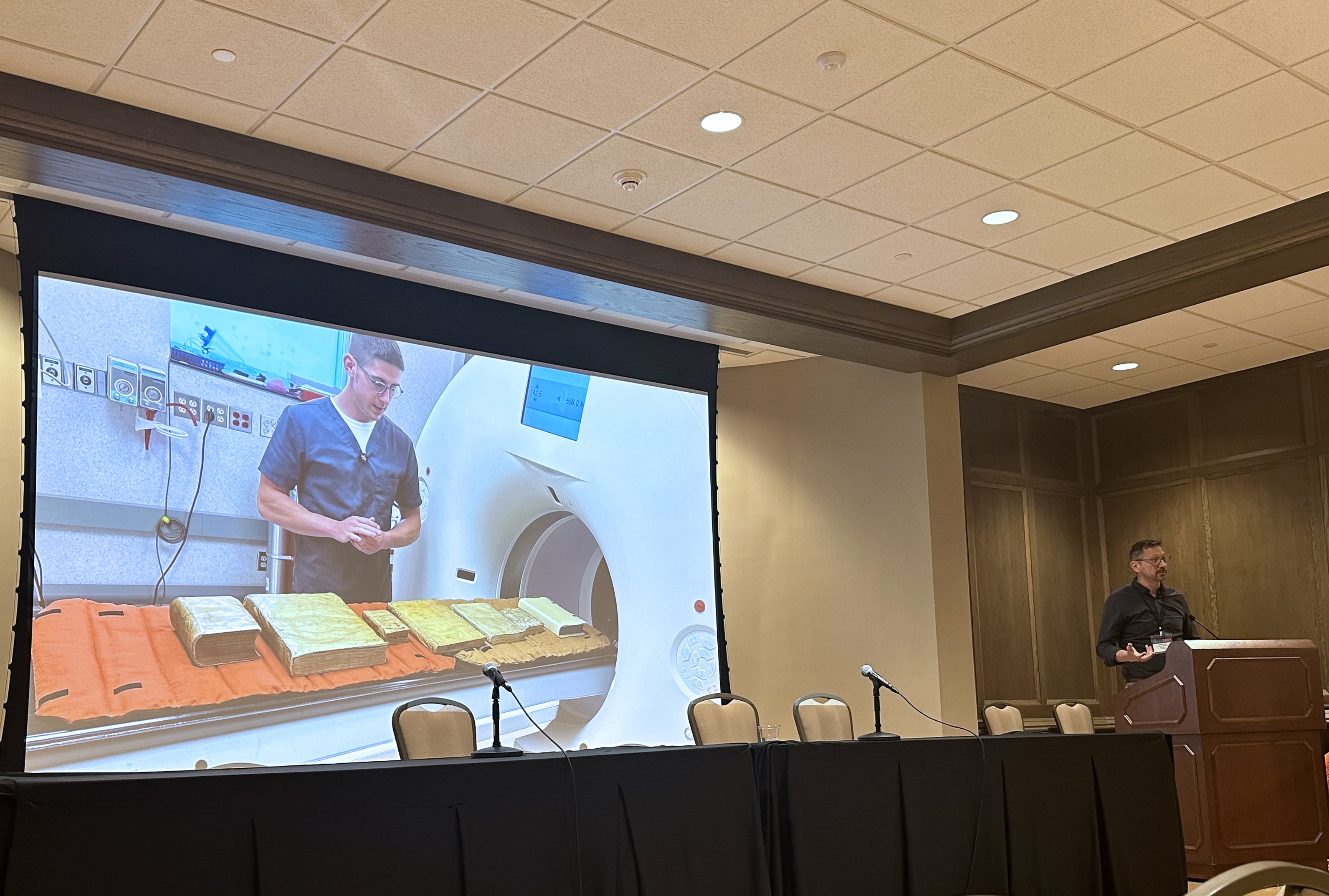
Yours truly pretending to know what I'm talking about regarding CT scanners.
JMRBR at the 2023 Rare Books and Manuscripts Section (RBMS) of ACRL
I had the opportunity in June to present with my UI Libraries colleagues Eric Ensley and Giselle Simón at the 2023 RBMS of the Association of College and Research Libraries, a division of the American Libraries Association. Simón, University Conservator, and Ensley, UI Special Collections Rare Books and Maps Curator, are part of the Iowa Initiative for Scientific Imaging and Conservation of Cultural Artifacts (IISICCA).
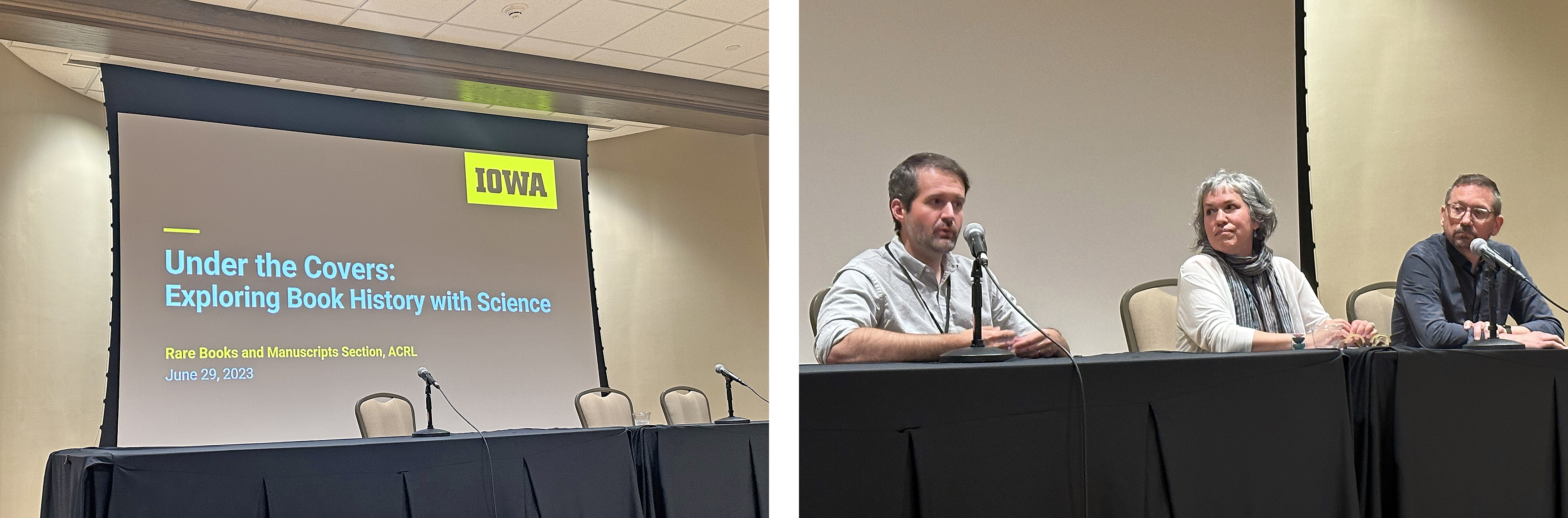
A very cool title slide and the panel looking serious, but actually having a fun time discussing the project.
Items from the JMRBR recently joined in the fun and were scanned to look for manuscript waste. Our panel talk, "Under the Covers: Exploring Book History with Science," covered this and more. There will be more on this exciting venture in a future newsletter!
 2023 Annual John Martin Rare Book Room Open House 2023 Annual John Martin Rare Book Room Open House
With featured speaker, Greta Nettleton
Recording now available on the Iowa Digital Library of Ms. Nettleton's presentation, The Great Forgetting: The Prominent Role of Women in 19th-century Midwestern Medicine.
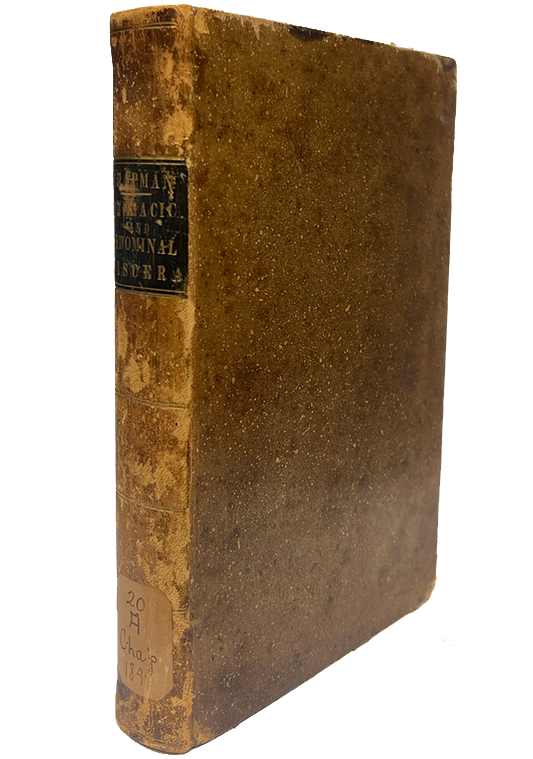
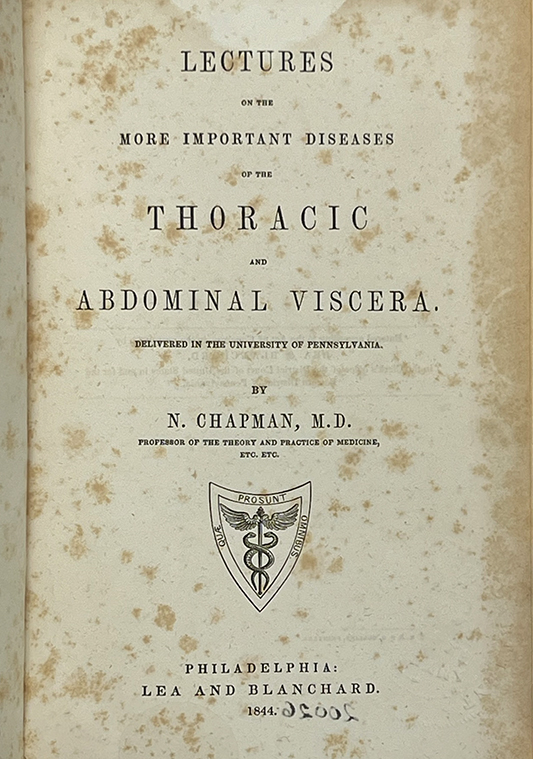
| | | | CHAPMAN, NATHANIEL (1780-1853). Lectures on the more important diseases of the thoracic and abdominal viscera. Printed in Philadelphia by Lea and Blanchard, 1844. 23 cm tall.
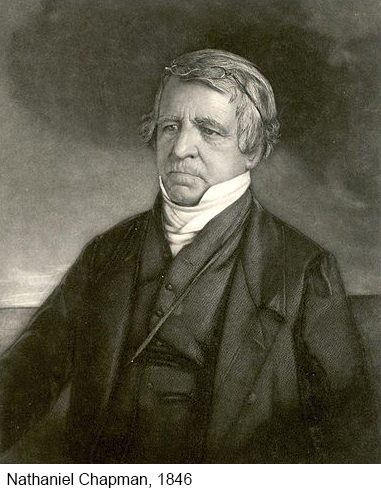
Nathaniel Chapman was born in Virginia but, at the age of 17, moved to Philadelphia to study under Dr. Benjamin Rush at the University of Pennsylvania. Rush was a very influential early American physician who, among other things, was a signer of the U. S. Declaration of Independence.
After graduating in 1801, Chapman continued his studies by touring Europe for three years. The first year he spent in London studying under the surgeon John Abernethy (of Abernethy Biscuit fame). He continued his studies in the western medical "mecca" of Edinburgh.
Upon returning to Philadelphia in 1804, he set up his practice and began providing private lectures on obstetrics. Soon after, he was appointed professor of midwifery at the University of Pennsylvania.
He quickly established himself as a popular lecturer, peppering his talks on less interesting topics with puns and anecdotes. Something I clearly admire about him. He eventually became the chair of Materia Medica (pharmacology) and, soon after the deaths of Benjamin Rush in 1813 and Dr.Benjamin Smith Barton in 1816, was appointed chair of Theory and Practice of Medicine - a prestigious position he held until his retirement in 1850.
Chapman is most well known for establishing the Philadelphia Journal of the Medical and Physical Sciences in 1820 and being elected the founding president of the AMA in 1847. The Philadelphia Journal of the Medical and Physical Sciences later became The American Journal of the Medical Sciences, one of the most important American medical journals of the 19th century.
Chapman wrote several books over his career, including the very well-regarded, Discourses on the elements of therapeutics and materia medica. | | | His books were often collections of his lectures. This included Discourses... and this month's book, Lectures on the more important diseases of the thoracic and abdominal viscera.
He prepared this work from lectures he had delivered at the university in order to better serve his students and also to be of assistance to practitioners who would be familiar with most of the diseases covered in the book. Among the diseases he discusses are pulmonary consumption, laryngitis, asthma, angina pectoris, gastritis, dyspepsia, enteritis, hepatitis, and jaundice. I am unsure how many of his puns made it through to publication.
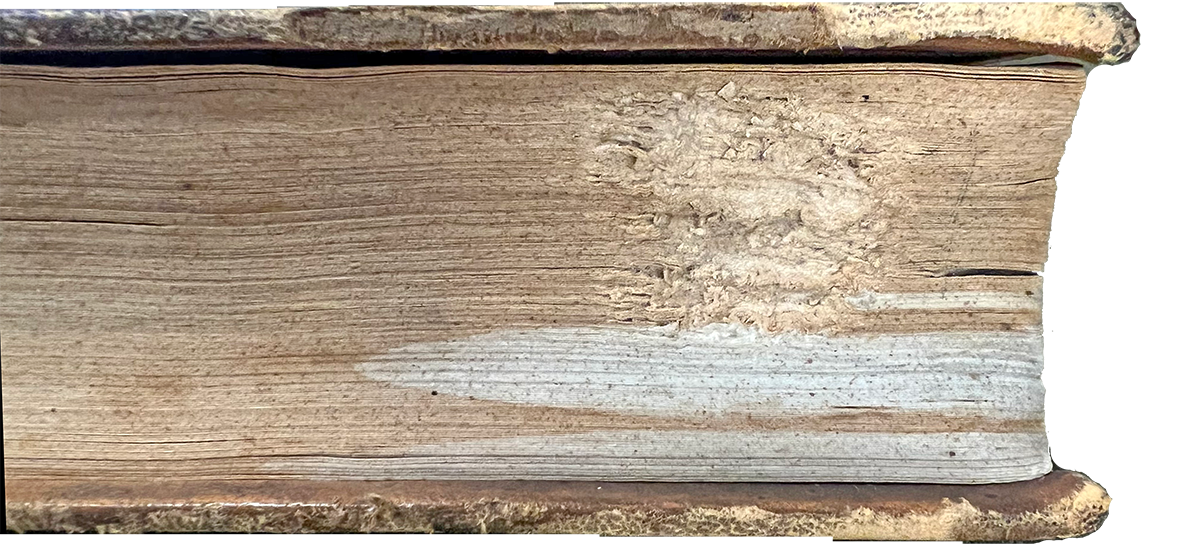
The book looks like a very standard 19th-century publication, although it comes with a couple of surprises. The cover is a common, thin, brown leather showing the wear and tear of the last 180 years. The paper, outside of pages early and late in the book, is in very good condition. As can be seen in the banner image above, the textblock sustained at least two types of interesting damage.
The first appears to be pest damage. We have not yet determined if it is from insects or rodents, but my money is on rodents. The second damage is intriguing because, in a way, it may have helped more than it hurt.
Right next to the pest damage on the foredge are a couple of white streaks running through the top quarter of the textblock. It appears as if some chemical was spilled on the top of the book and some of it made it down into the pages. Whatever this was must have been basic in nature.
Paper at this time was often more acidic due to the inclusion of wood pulp and normally looked more like the title page image above, splotched or entirely brown and brittle. Much like a superhero origin story, the chemical spill gave the paper special powers and helped protect it from the evils of acid and other impurities.
Contact me to take a look at this book or any others from this or past newsletters: damien-ihrig@uiowa.edu or 319-335-9154 to arrange a visit in person or over Zoom. | | | |