|
Autumn greetings from the JMRBR!
|
|
Damien Ihrig
Curator, John Martin Rare Book Room
The last of the summer heat is dissipating, the campus has reopened, and the trees have begun their annual wardrobe change.* Fall is my favorite time of year. I love the sights, sounds, and smells. And although my excitement is somewhat dampened by the effects of an extended pandemic and assorted natural disasters, I AM still excited. The Rare Book Room is open for business! Researchers are visiting, classes are lining up to learn about the JMRBR and how to use our materials, and I have started scheduling events for the coming year. Keep an eye out for an announcement of the schedule.
|
|
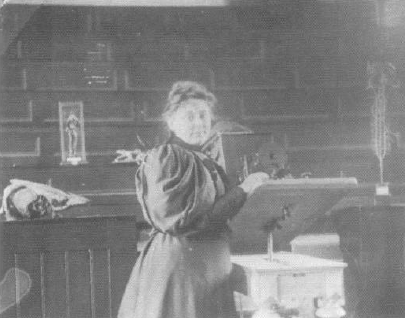
This month we honor the September birthday of Ida Henrietta Hyde. Hyde was born in Davenport, Iowa in 1857 and was a pioneering scientist and inventor. She overcame discrimination at every level of her education and career and fought for equality in academia until her death in 1945. She was the first woman allowed to do research at Harvard, the first woman admitted to the American Physiological Society, and Inventor of the microelectrode. Although we are not fortunate enough to have any of her works in our collection, we have many other fine items from the fields of neurophysiology and electrophysiology. We highlight one such set in our book of the month. |
Stay well and happy reading!
|
|
The Rare Book Room is open! We can accommodate one researcher/visitor at a time.
Please make an appointment by contacting Damien Ihrig at damien-ihrig@uiowa.edu.
|
|
|
|
|
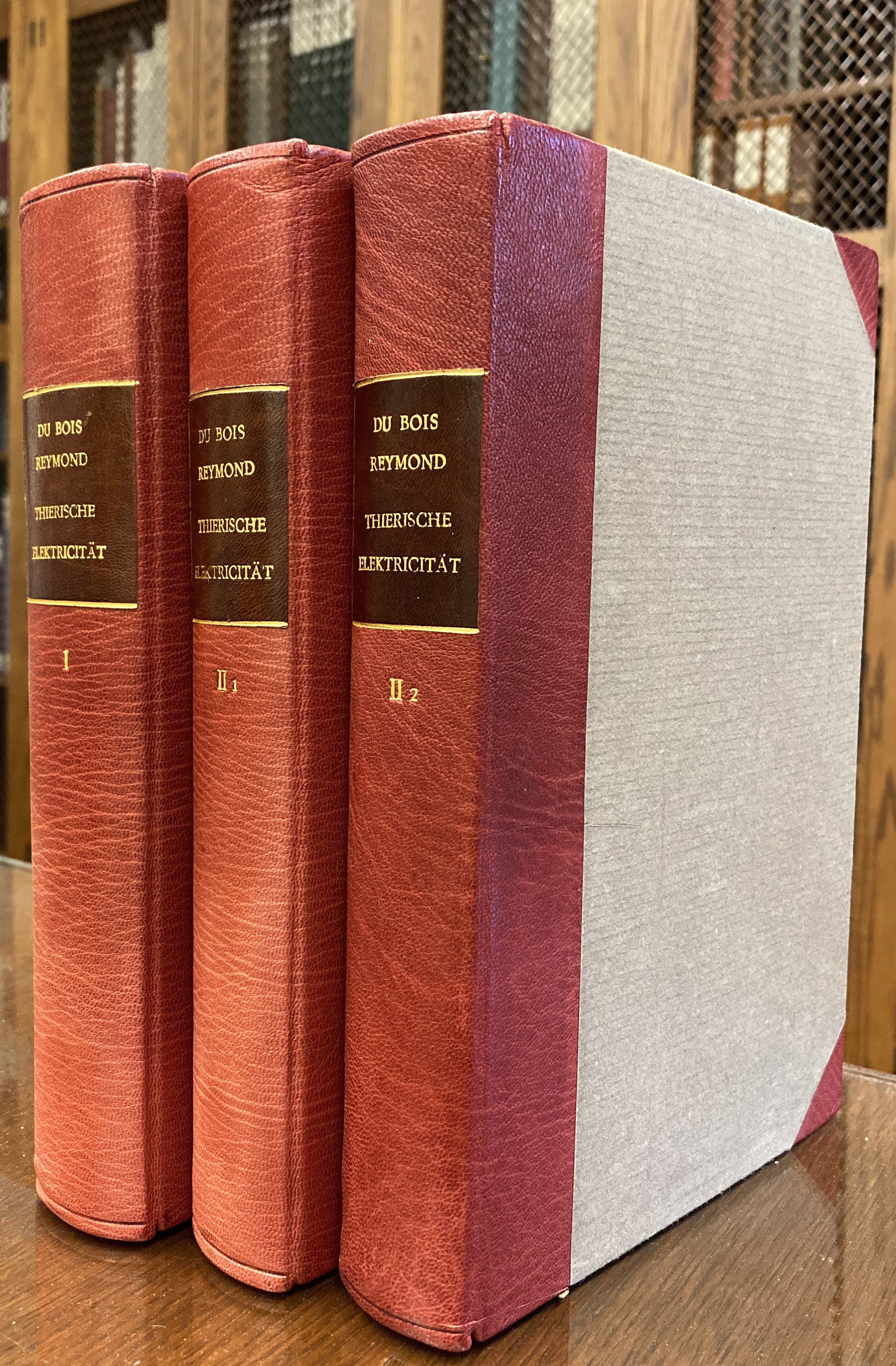
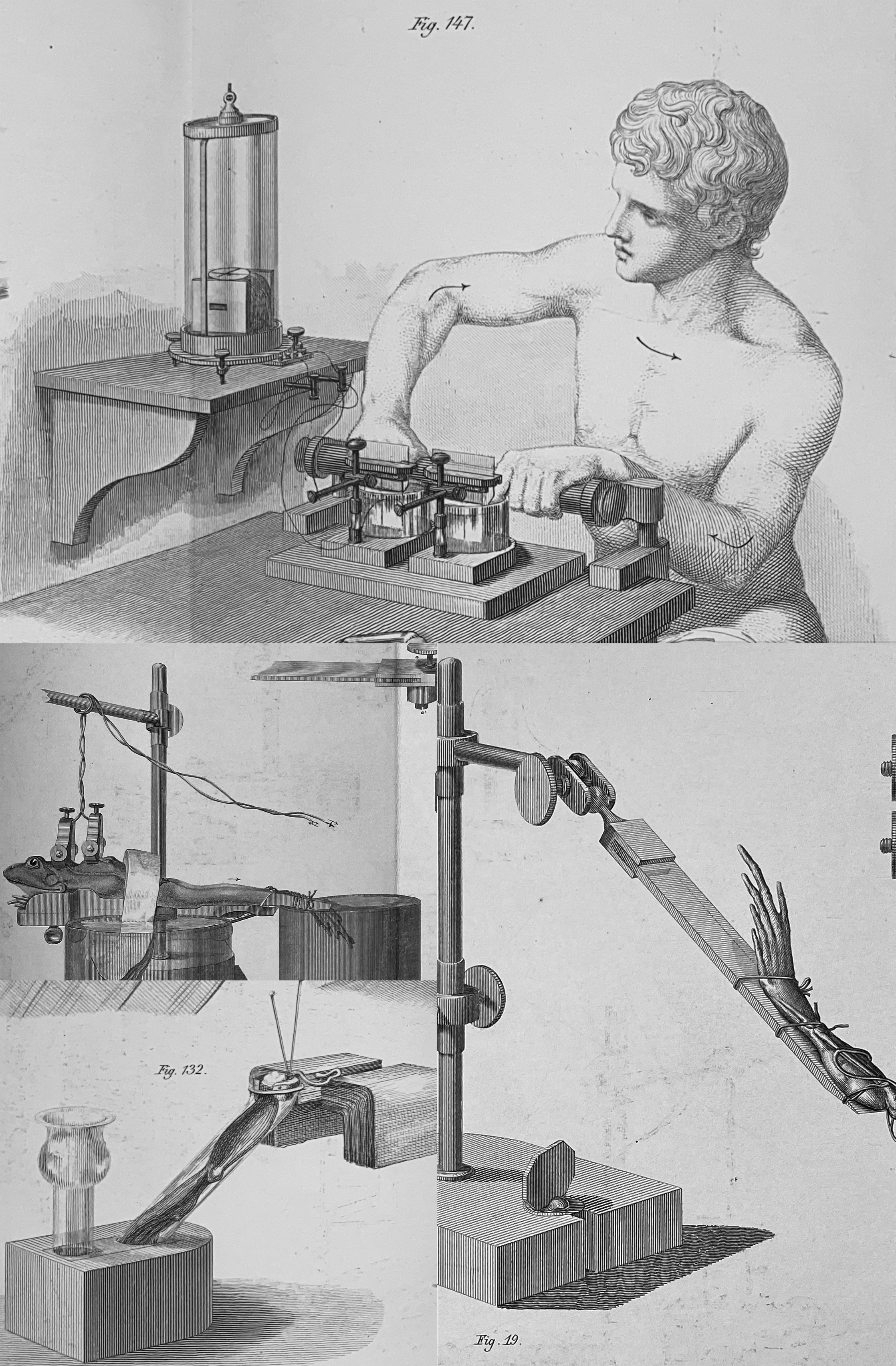
EMIL HEINRICH DU BOIS-REYMOND (1818-1896). Untersuchungen über thierische Elektricität. Printed by Georg Reimer from 1848-1884. Volume I: 743 pages with 6 folded, black and white plates; Volume II, Part I: 608 pages with 5 folded, black and white plates; Volume II, Part II: 579 pages with 2 folded, black and white plates. 23.7 cm.
Du Bois-Reymond, considered by many authorities to be the founder of modern electrophysiology, was a pioneer in the study of electrical impulses in nerve and muscle fibers. Born in Berlin, he studied there at the Collège Français, later at Neuchâtel in Switzerland, and finally entered the University of Berlin in 1836 as a student in philosophy. After graduating from Berlin, he was prompted to study medicine by a colleague of the well-known physiologist, Johannes Müller (see No. 1631 ff.). After completing the requirements for a degree in medicine, Du Bois-Reymond accepted an assistantship with Müller who directed his interest to the study of electrophysiological problems. Proper instrumentation for the research he wished to conduct was lacking so Du Bois-Reymond developed new instruments and applied scientific methods to the study of animal electricity. Among the instruments he constructed were sensitive galvanometers, multiplicators, non-polarizable electrodes, the Du Bois-Reymond key, and the Du Bois-Reymond inductorium--a special type of induction coil used for faradic stimulation of nerves. He was the first to prove that muscular activity is accompanied by chemical changes in the muscle as well as by changes in its electromotive properties. Du Bois-Reymond showed that a tetanized muscle yields an acid reaction while a resting muscle is alkaline. In 1843 he demonstrated the
|
|
|
phenomenon of electrotonus which refers to the potential changes produced by an externally applied current. He also discovered the resting nerve current and the difference in electric potential between the cut and uninjured ends of an excised muscle or nerve. Many of these studies and experiments are described in the present work. Du Bois-Reymond succeeded Müller in the chair of physiology at Berlin in 1858 and was successful in seeing a physiological institute planned and built in 1877. He was head of the institute for nearly twenty years, served as rector of the university, and had editorial responsibilities with several of the leading medical journals of his day. He was an accomplished author and wrote many philosophical essays and biographical studies in addition to his numerous physiological studies.
Untersuchungen über thierische Elektricität is Du Bois-Reymond's major work and contains the body of his physiological studies and research. The first volume appeared in 1848 and the first part of the second volume in 1849. The second volume was not completed until 1884 after additional years of research and experimentation. Because of the long intervals between the publication of the individual volumes, complete sets of the work are very rare. This set contains thirteen plates of illustrations instead of the usual twelve because one of the plates in Volume I is duplicated in Part I of Volume II. The set was bound at some point in gray paper over paper boards, with a bright, half red Morocco leather and gold stamped spine titles. The books are also unique because they include the original "wrappers" describing the contents of the unbound manuscripts. And because the pages in all three books are "unopened." This means adjacent pages have not been separated and cannot be fully opened. This is due to a method of printing and binding where a larger sheet of paper is printed with several pages of text, folded, and bound. It makes for difficult reading, but is fun to see!
Please contact me at damien-ihrig@uiowa.edu if you would like to arrange a time to view any of these items.
|
|
|
|

![Decoration from Aristotelis De natura animalium, libri nouem. De partibus animalium, libri quattuor. De generatione animalium, libri quin[que], 1498](https://dispatch-cdn.its.uiowa.edu/library.hardin/c/809657755/rbr_banner_2.png)