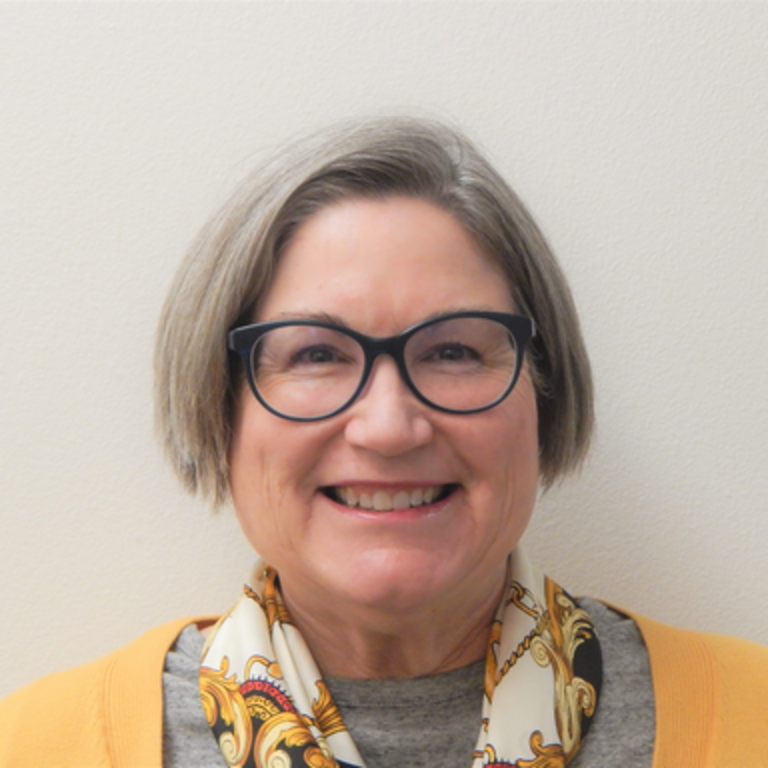
| Letter from the Training Director | Hello Everyone,
The IPWC is thrilled to present you with our first newsletter. We'll send the newsletter directly to your email box four times a year. We will spotlight local agencies that are providing peer support; upcoming dates for Peer Support Specialist (PSS), Recovery Coach (RC), and Family Peer Support Specialist (FPSS) training and CEUs; data nuggets on the peer workforce that we think you might find interesting; Iowa Peer Interconnect activities; and how to connect with us. If you have peer or agency news to share, please email us.
We want the IPWC Newsletter to provide valuable information for everyone working as a PSS, PR, FPSS, or peer supervisor. We hope you enjoy our newsletter!
Kellee
Kellee Thorburn McCrory, LMSW, MPH
Training Director
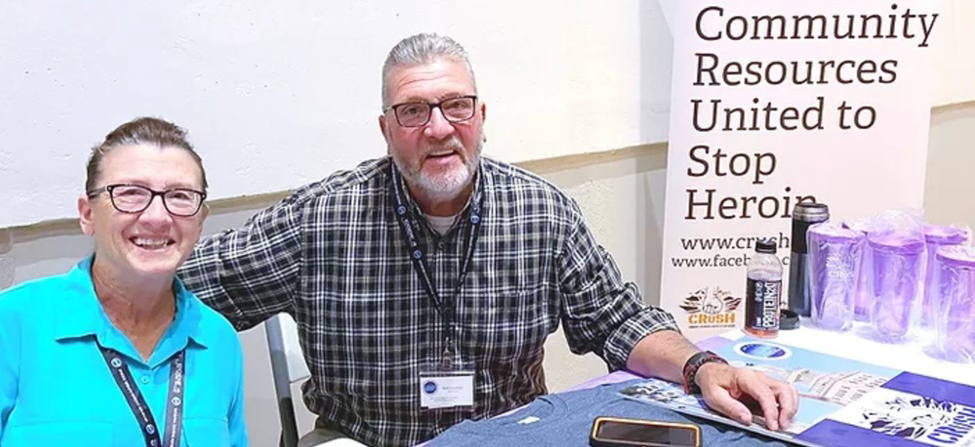
| | | | When you walk through the door to explore CRUSH of Iowa’s Recovery Community Center (RCC), located in the heart of Cedar Rapids, one of the first questions you may hear is, “What does recovery look like to you?” Built on the foundational belief that there are multiple pathways to recovery, CRUSH of Iowa opened its doors in June of 2022, with support from a grant awarded to the peer-run organization by the Iowa Health and Human Services (Iowa HHS), in conjunction with the Substance Abuse Mental Health Services Administration.
Rod and Deb Courtney founded CRUSH of Iowa in 2016 after losing their son, Chad, to fentanyl poisoning. During this time, the Courtneys say they experienced the power of the peer-centered approach, reinforced by the importance of community and connection. In early 2019, Rod participated in the Connecticut Community for Addiction Recovery (CCAR) Recovery Coach Academy offered through Iowa HHS. Rod says, “I literally came home from that training and I told Debbie, I said, I want to open up a recovery community.”
Today, CRUSH’s RCC is a safe place for individuals in the recovery community to meet and share hope with each other, as well as with their families and friends. The focus is to provide support, resources, and connections for all individuals whose lives have been affected by any type of substance use.
The Courtneys and other recovery coaches within the organization continue to hear positive comments when people visit the center. Rod says, “We started seeing the power of peer recovery coaching when people come to the door and say things like, “‘It’s comfortable here.’ ‘I feel welcomed here.’, ‘I don’t feel judged.’”
Dozens of employees and volunteers with CRUSH have become trained recovery coaches (RCs) by completing CCAR’s Academy.* Deb Courtney explains how the person-centered, strengths-based philosophy is embedded within the organization’s culture: “One of the things we do here is everybody has a voice.” Rod reinforces their value of everyone working together, “We just want to collaborate. I mean, you know, we’re not clinicians, but we understand the importance of clinicians.”
And some clinicians in Cedar Rapids are affirming the importance of the recovery coach profession as word of the center’s success continues to spread throughout eastern Iowa. A collaboration, started earlier this year with Cedar Rapids Mercy Hospital’s emergency department, is an example of how CRUSH of Iowa is facilitating change.
ER staff now hand out CRUSH of Iowa pamphlets to some patients and can ask if they would like the opportunity to visit with a PRC while in the emergency room. And when a patient decides they want to talk with someone, one of the many PRCs specially trained through CCAR’s Recovery Coaching in the Emergency Department* is dispatched to the hospital to connect with the interested person.
CRUSH of Iowa staff consistently, and effectively, continue reaching out and expanding their recovery services beyond the walls of the recovery center. The benefits of this outreach include enhancing awareness, reducing stigma, and facilitating connections to recovery. CRUSH stands for Community Resources United to Spread Hope. And that’s what the PRCs from CRUSH of Iowa are doing—spreading hope.
The CRUSH Recovery Community Center is located at 317 7th Ave. SE, Cedar Rapids, IA 52401. For more information about the organization and a calendar of meetings and events, please visit their website, CRUSH of Iowa.
*Training is offered at no cost through the IPWC, which is funded by a grant from Iowa HHS to the University of Iowa National Resource Center for Family Centered Practice (UI-NRC). | | | Recovery coaches are essential workers who support individuals in recovery, as well as family members, friends, and allies. Recovery coaches remove barriers to recovery, ensuring all individuals in recovery and those seeking recovery are treated with dignity and respect. Their support comes in many forms. They provide emotional support; information; linkage to treatment and recovery support services; and connection to the broader recovery community.
The IPWC recognizes the need to grow Iowa’s behavioral health workforce, including the number of recovery coaches. In 2024, we offered several trainings for recovery coaches and their supervisors through the Connecticut Community for Addiction Recovery (CCAR). So far this year, 116 people completed the foundational Recovery Coach Academy training. In addition, 119 recovery coaches or their supervisors completed four specialty trainings—Ethical Considerations for Recovery Coaches, Recovery Coaching in the Emergency Department, Recovery Coaching in Justice Settings, or Coachervision.
The IPWC will continue to offer recovery coach training, along with a host of other training for peer professionals. All training is provided at no cost to Iowa’s peers through Iowa HHS funding. For Upcoming IPWC Training, click here. | | | | How Much Are Peer Workers Paid in Iowa? Organizations interested in creating peer programs want to know how to classify peer workers by job title and how much to pay them. We used two strategies to estimate 2024 peer worker salaries in Iowa: a job ads study and a statewide survey.
Iowa Peer Job Ads Study
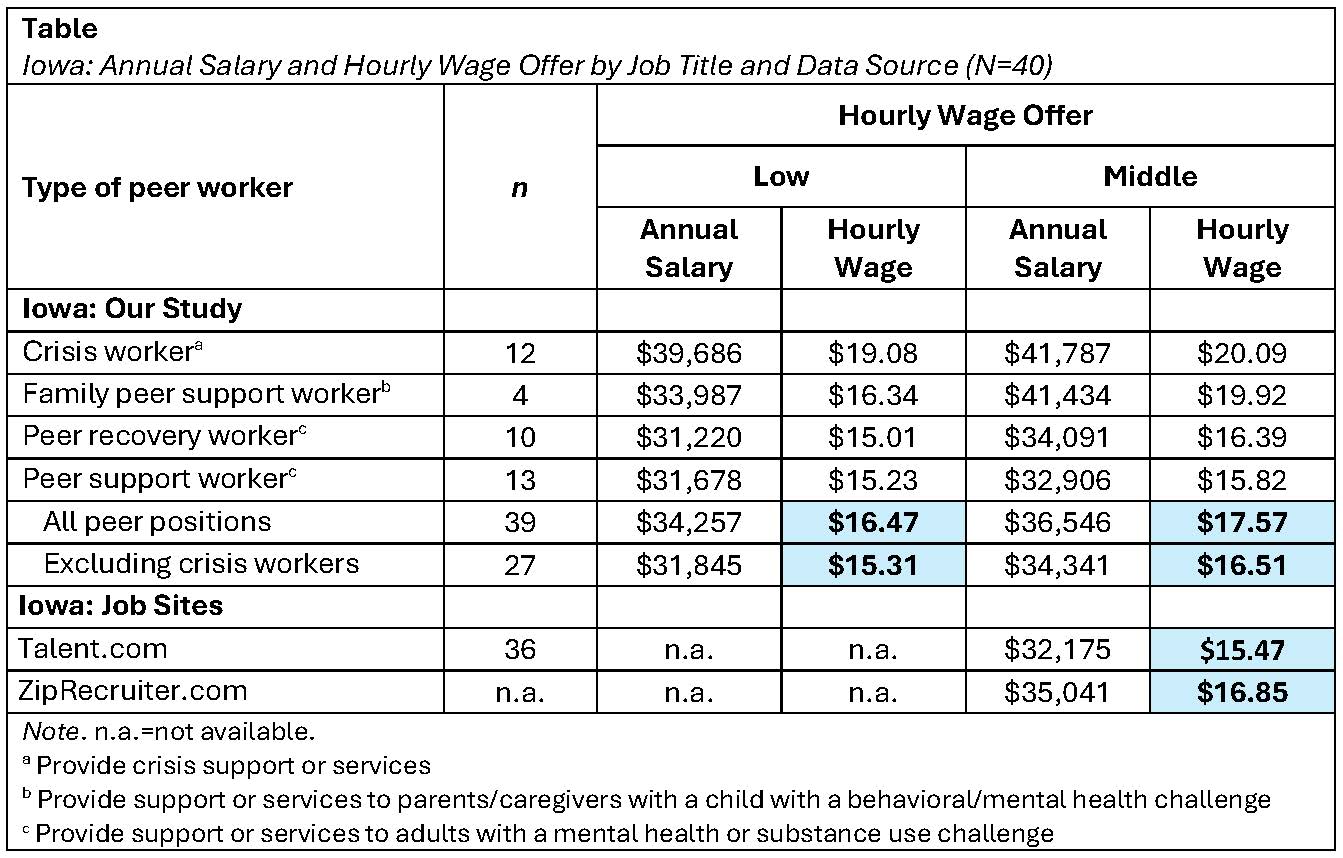
We found peer job wage offers ranged from $12.00 to $31.84 per hour. The Table (below) includes the median (or middle) hourly wage that organizations could offer, not the wage organizations necessarily did offer. The median hourly wage that organizations could offer was $17.57. After removing crisis worker positions, the median hourly wage offer was $16.51.
We used data from ZipRecruiter.com and Talent.com to compare Iowa's wage offers to those of other states because ZipRecruiter and Talent have algorithms to extract peer position job titles. We used Google Chrome’s free Instant Data Scraper Extension to download peer support worker data by State. Talent.com estimated that the average hourly wage offer for Iowa peer support workers was $15.47 (ZipRecruiter: $16.85 per hour). ZipRecruiter ranked Iowa 42nd among 50 states on hourly wage offers, while Talent.com ranked Iowa 41st among 46 states. Iowa peer worker wage offers are in the lowest wage quartile nationally. For the full report, including job titles, click here.
Iowa Peer Workforce Survey
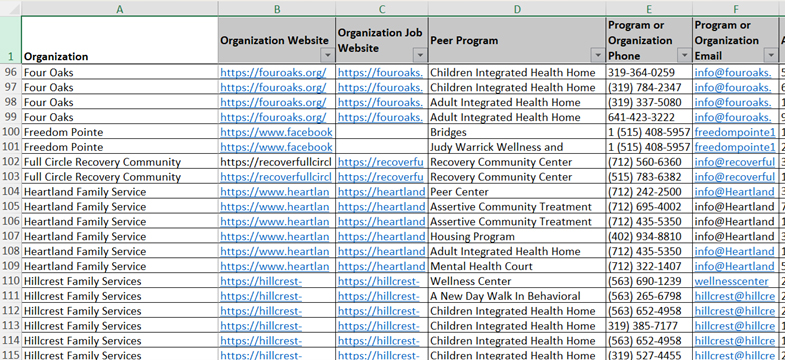
We received funding from the Telligen Community Initiative to understand Iowa peer worker experiences and how they relate to their well-being, job satisfaction, and intention to stay or leave their organizations. We defined peer workers as adults with lived experience (mental health or substance use challenge) who are currently employed or were previously employed as a peer support worker or volunteer in Iowa. Using data from 182 currently employed peer workers, we found the average hourly wage ($17.58), which was nearly identical to the median hourly wage offer ($17.57) in our Iowa Peer Job Ads Study Report. We’ll report additional findings on Iowa’s peer support workers in future newsletters. | | | Iowa has at Least 245 Peer Program Locations. Here’s How to Find Them.
Insert the link to the Excel file here | | | | Introducing Iowa Peer Interconnect! Big news! We received supplemental funding from Iowa HHS to offer a new project, which we’re calling Iowa Peer Interconnect (IPI). Below, we describe a few of the new activities that we will offer through the IPI.
For Peers
The IPI will provide peer-to-peer groups and continuing education (just like we have through IPWC, but now we can provide more CEUs), and many other activities. We are integrating an IPI web page into the IPWC’s website to provide a one-stop shop for training and peer connection. We just added our first activity, the Peer Support for Peer Support (PS4PS) group. Laura Semprini and Nancy Teubel of NAMI Johnson County will facilitate this group, which will meet twice a month.
For Peer Supervisor
We’re also gearing up to start a Peer Supervisor Education and Case Discussion group, which will meet at noon on the last Friday of the month, beginning January 2025. Peer supervisors and managers can earn up to six CEUS by attending the series. With IPWC staff, three peer supervisors, Jen Riley of Pathways, Jodie Huju of Full Circle Recovery, and Faraji Hubbard of the Guidelink Center will develop and teach the series. It will include a 15–20-minute educational topic and a 30-minute directed case discussion. The first few cases will focus on creating space to talk with supervisees about their well-being and performance and how to respond to a mental health or substance use disclosure, including discussing accommodations.
For Prospective IPI Board Members
In the next year, we need guidance and assistance to complete several activities. Board members will help advance Iowa Peer Interconnect and support IPI staff by:
- Encouraging peer employees and volunteers to engage with IPI
- Assisting with the planning of the March 3, 2025, Mental Health Day on the Hill, which will be led by Iowa NAMI and include several state-level organizations
- Providing guidance on educational offerings and potential CEU opportunities
- Providing feedback on other IPI activities
The Board will meet once a month for one hour through June 2025. Members are expected to attend at least 80% of Board meetings. Members are not expected to assist with activities before/after Board meetings but are encouraged to do so! To be eligible for Board membership, you must be a Peer Support Specialist, Family Peer Support Specialist, Recovery Coach, peer supervisor, peer services provider, or peer advocate/ally. To apply for membership, click Iowa Peer Interconnect Board Application.
Look for updates on the IPI in our January 2025 IPWC newsletter. We’ll be in full swing by then! | | | |




.jpg)